
CHEVES
ATTORNEYS
Specialist Environmental, Planning and Development Attorneys
(Based in Westville, Kwazulu-Natal, Republic of South Africa)


My name is Bob Cheves. Welcome to my firm’s website.
Introduction
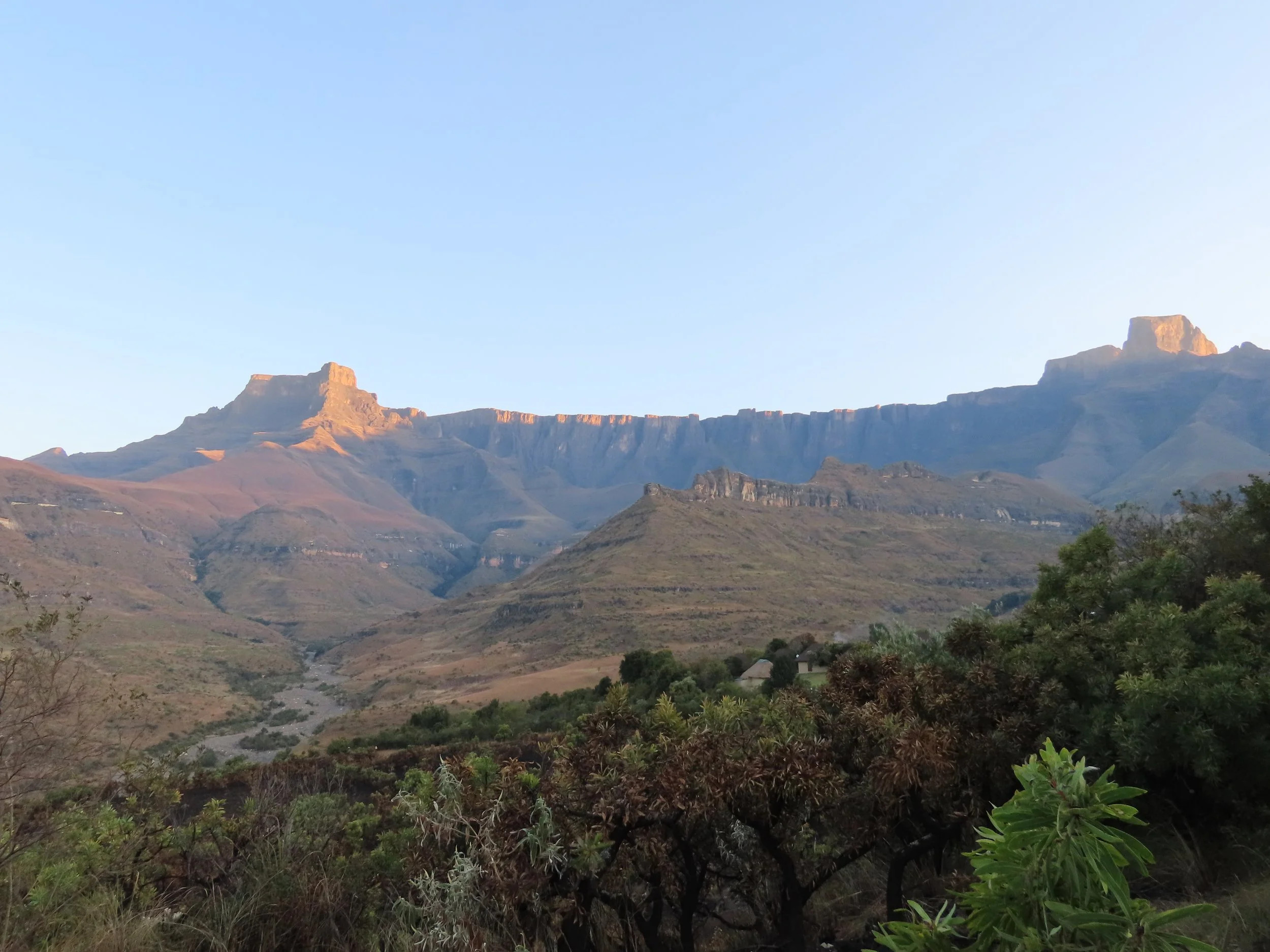
I am a practising attorney and opened my own niche law firm, Cheves Attorneys, at the beginning of March 2024. Previously, I was a partner at Norman Brauteseth & Associates Attorneys, which I joined in 2004. The nearly 20 years spent at Norman Brauteseth & Associates Attorneys enabled me to acquire the necessary skills and experience required by a Specialist Environmental, Planning and Development Attorney.
As far as my qualifications are concerned, I have BA and LLB degrees (completed at the end of 1986), and in addition, I completed my Master’s degree in Environmental Law with distinction (cum laude) at the end of 2006.
I am a member of both the Environmental Law Association of South Africa (ELA) and the International Association for Impact Assessment South Africa (IAIAsa).
On a more personal note, I am a social runner, avid birdwatcher and keen indigenous gardener. When I have an opportunity to “get away”, I enjoy camping which provides an opportunity to dabble in another of my interests, amateur photography.
If you continue to scroll down, you will discover more about the professional services I render, as well as my contact particulars.


My Services
-
In simple terms, Environmental Law encompasses the application of all legislation relating to sustainable development, environmental impact assessment, biodiversity, protected areas, forests, marine resources, water, waste, pollution, energy and related fields. While at present, such law exists predominantly at a National level, it also exists at Provincial and Local Government level.
I assist clients from many sectors regarding the interpretation and application of all areas of Environmental Law, for example, in connection with obtaining environmental authorization, or ensuring legal compliance. From time to time, that involves resolving compliance issues between clients and the authorities using the appropriate legislated processes.
I am not an Environmental Assessment Practitioner (EAP), but I work closely with EAPs to provide assistance when legal aspects of their work arise. This often involves giving oral advice or written opinions when required.
Further, I assist clients regarding most aspects of the many licenses, permits and authorizations required from time to time under South Africa’s well developed and at times complicated raft of Environmental Legislation.
-
Municipal Planning is essentially a modern term to describe what used to be referred to as “Town Planning”. Municipal Planning is a Constitutional power given to municipalities and includes matters such as development approvals, rezonings, subdivisions, special consents, removal of conditions, and so forth.
Examples of work I undertake include, preparing planning objections and appeals as well as giving advice and formal opinions on the full range of municipal planning work.
I am not a Town Planner, but I do work closely with Town Planners from time to time where they and their clients require legal services.
-
Since the Local Government: Municipal Property Rates Act no. 6 of 2004 (the MPRA) came into operation I have gained much experience regarding a wide range of matters relating to Municipal Rates.
I am not a Registered Valuer and do not value properties, but I work closely with Valuers from time to time regarding technical aspects of the Municipal Property Rates Act, for example, verifying whether the Municipality has correctly applied a change in municipal valuation and has implemented such valuation from the correct date.
-
In addition to the other work described, I also assist both applicants and objectors in connection with applications for Site and Retail Licenses in terms of the Petroleum Products Act.
-
Compliance with the NBR&BS Act can be a highly contentious matter.
Due to amongst other things, a lack of enforcement capacity at municipal level, compliance with the Act is often not properly policed and an increasing number of people are constructing buildings without the necessary building plan approval.
Further, when building plans are approved by a municipality, such approval is sometimes irregular alternatively, inadequate attention has been given to controversial matter such a neighbour’s “view”.
I have much experience in assisting clients, both developers and objectors, to navigate a wide range of building plan approval related matters.
-
Apart from the work described under the above headers, I also accept a wide range of property related work, subject of course to the qualification that I am NOT a Conveyancing Attorney.
For example, I work closely with the Land Survey Profession regarding matters affecting Land Survey legislation as well as areas of overlap between Land Survey work and work carried out by other professions.
Please note that, due to my specialization, I unfortunately do not accept work relating to matters such as debt collection, general litigation, personal injury claims, divorces and so forth which would ordinarily be handled by an attorney operating a general practice.
-
I have set out below some links which you may find useful:
Website of the Government of South Africa: https://www.gov.za
Website of the National Department of Forestry, Fisheries & Environment: https://www.dffe.gov.za
Website of Ezemvelo KZN Wildlife: http://www.kznwildlife.com
Sustainable Development
“Sustainable Development” lies at the core of Environmental Law, but what does it mean?
Section 1 of NEMA defines “sustainable development” as:
“'sustainable development' means the integration of social, economic and environmental factors into planning, implementation and decision-making so as to ensure that development serves present and future generations”.
The Constitutional Court
The Constitutional Court has stated the following regarding the application of the principle of sustainable development and the balancing of often competing interests in the context of development:
“[60] One of the key principles of NEMA requires people and their needs to be placed at the forefront of environmental management - 'batho pele'. It requires all developments to be socially, economically and environmentally sustainable. Significantly for the present case, it requires that the social, economic and environmental impact of a proposed development be 'considered, assessed and evaluated' and that any decision made 'must be appropriate in the light of such consideration and assessment'. This is underscored by the requirement that decisions must take into account the interests, needs and values of all interested and affected persons.
[61] Construed in the light of s 24 of the Constitution, NEMA therefore requires the integration of environmental protection and economic and social development. It requires that the interests of the environment be balanced with socio-economic interests. Thus, whenever a development which may have a significant impact on the environment is planned, it envisages that there will always be a need to weigh considerations of development, as underpinned by the right to socio-economic development, against environmental considerations, as underpinned by the right to environmental protection. In this sense, it contemplates that environmental decisions will achieve a balance between environmental and socio-economic developmental considerations through the concept of sustainable development.”
Per Ngcobo J in FUEL RETAILERS ASSOCIATION OF SOUTHERN AFRICA v DIRECTOR-GENERAL: ENVIRONMENTAL MANAGEMENT, DEPARTMENT OF AGRICULTURE, CONSERVATION AND ENVIRONMENT, MPUMALANGA PROVINCE, AND OTHERS 2007 (6) SA 4 (CC)
The Constitution of the Republic of South Africa, 1996
Environmental Rights are protected by the Constitution of South Africa, 1996
“24 Environment
Everyone has the right-
(a) to an environment that is not harmful to their health or well-being; and
(b) to have the environment protected, for the benefit of present and future generations, through reasonable legislative and other measures that-
(i) prevent pollution and ecological degradation;
(ii) promote conservation; and
(iii) secure ecologically sustainable development and use of natural resources while promoting justifiable economic and social development.”
These rights are protected by legislation including the National Environmental Management Act, no. 107 of 1998 and various Specific Environmental Management Acts relating thereto.
Contact Us
Please Note: All personal information received by me will be kept confidential in terms of the Protection of Personal Information Act (POPIA) and will be deleted by me on your written instructions to do so.